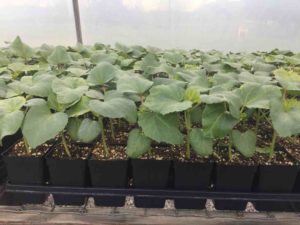
 If you love okra as we do, you want it in the garden as soon as possible. That is why we start our okra in the greenhouse and set the plants out when most folks are sowing the seeds. This gives us more than a month’s jump on the season. We always start more than we need for our garden and make the extras available to you. This is the best crop of okra we have had in years. Come by and get yours today.
Of course tomato, pepper, and eggplant plants are ready too. If your fancy turns to herbs we have chives, parsley, basil, and cilantro. Looking down the weather forecast as far as we can, it appears that it is safe to set all of your starts out. We also have Wave Petunias in purple, red, and pink. We also have red periwinkles, and a small assortment of perennial (first-year) flowers: foxglove, purple coneflower, and columbine.
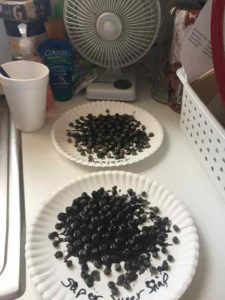
Now if you still like to sow your okra directly in the garden like your grandparents did, we save seed from the best of our Clemson Spineless crop each year and we have okra seed for everyone who asks, FOR FREE (while supplies last). Just ask.
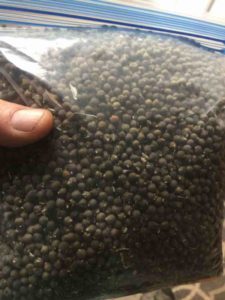 Here are some tips for you okra seed sowers out there:
- Soak the seed in a glass of water for a day before sowing. We pump air into the water using an aquarium pump to keep the seeds moving which keeps the seed roots straight.
- Don’t let the roots get too long before sowing the seeds, and don’t let the seeds dry out before sowing.
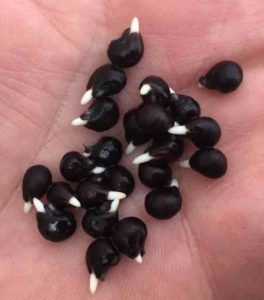
- Sow only the seeds that show a root emerging (see the last photo).
- Sow the seed no more than a half inch deep.
- Sow okra thickly. Okra has notoriously bad germination.
- Water your okra rows as soon as they have been sown.
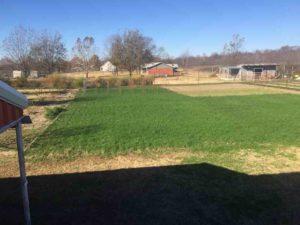
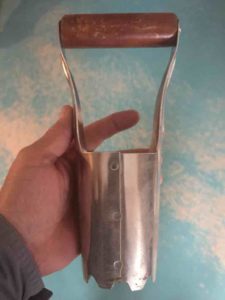 Over the years we have found that a standard bulb planter is the best tool for setting out our tomato and pepper starts in the spring. It works well for broccoli and cabbage plants too; in fact, everything we grow in our standard 2½” deep pots are set out with a common bulb planter. Our gardening methods involves not tilling the ground in the spring. In the fall, winter wheat is sown in the garden as a cover crop. The “cover” keeps winter weeds from getting a foothold and pumps organic matter into the soil, among other things. Dead wheat stubble is all that litters the ground in the spring at planting time.
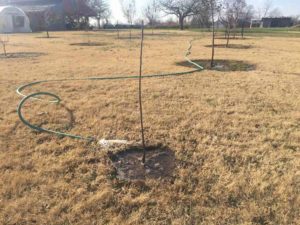 Newly fall-planted trees and shrubs are still establishing their root systems. Fall is the optimum time of year to plant, especially fruit trees.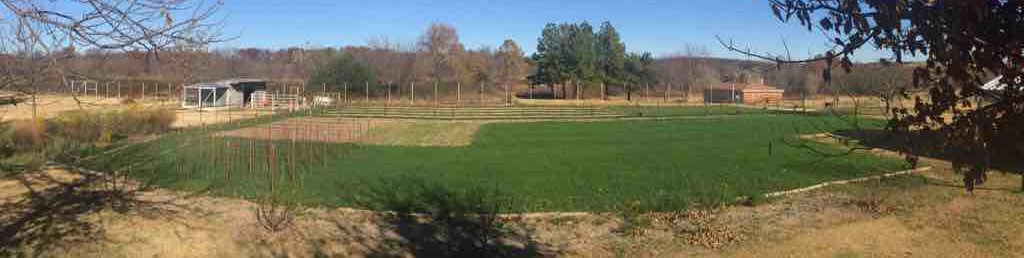
 Grow an upright/climbing variety. They are easier to pick, get the crop off the ground, and provide a much larger/longer harvest. We like Maxigolt for an English/shelling-type pea, and Super Sugar Snap for a snap pea. Each variety grows to around 48″, so you will need to provide some kind of fence for them upon which to grow.