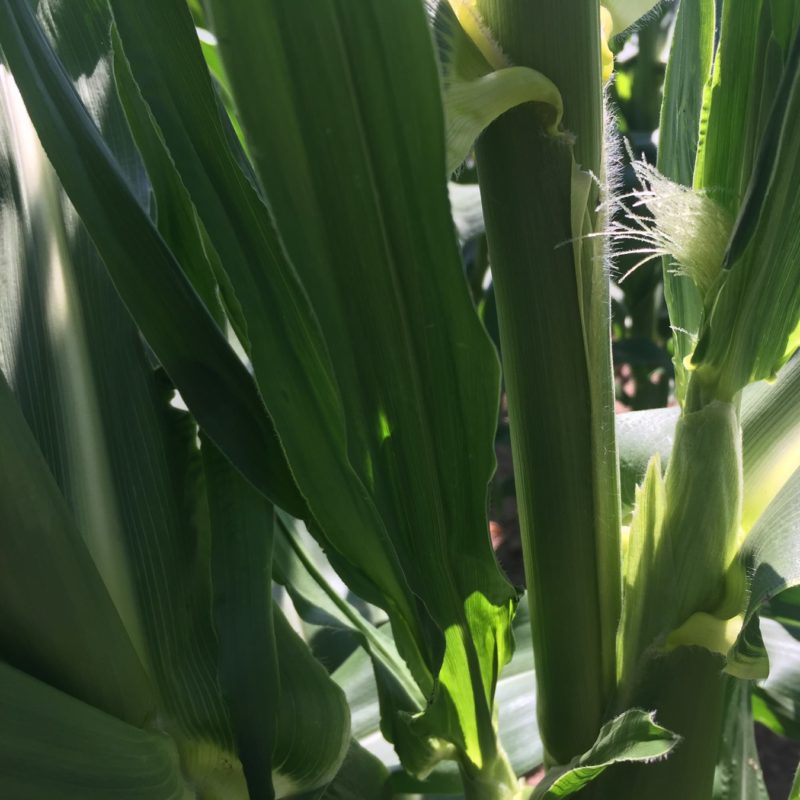
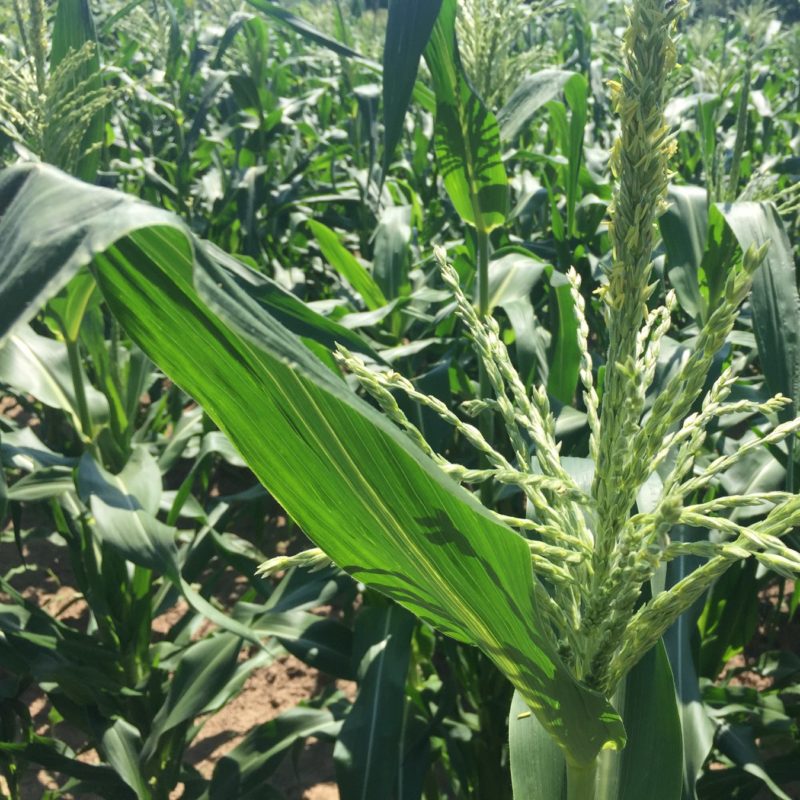
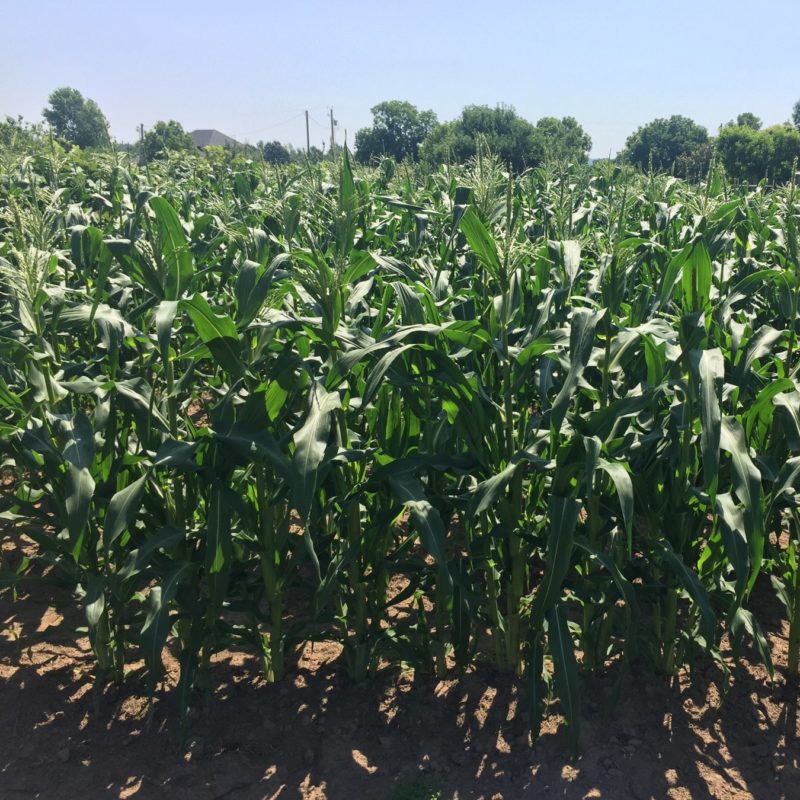
Silk plus tassel = roasting ears in about a month. Stay tuned. HighFenceFarm
High-Fence Farm LLC
(Formerly "Hatcher's Farm & Greenhouse")
Silk plus tassel = roasting ears in about a month. Stay tuned. HighFenceFarm
 Starflowers are considered to be one of the easiest to grow of the spring-flowering bulbs, and is easily grown in average, medium, well-drained soils in full sun to part shade. We have ours growing primarily under two Magnolia trees, but as we have been finding new plants straying out very far into the lawn we have been digging them up and setting them around other tree trunks in the landscape. They naturalize perfectly around trees, casting seed modestly. Plant bulbs 2-3” deep and space 2-4” apart in fall. For the homeowner however, the strays can be dug up as soon as you spot them. If you wait for these till the fall, you will scarcely be able to remember where they were. Starflowers neutralizes easily by bulb multiplication and the seeds produced readily germinate and grow, providing new plants to plant elsewhere in the landscape. Starflowers go dormant by late spring and the foliage just disappears.
Ipheion uniflorum, is native to parts of South America and features grass-like foliage and solitary star-shaped flowers on 6” tall stems in early spring. Each bulb produces multiple flowering stems. Flowers range in color from almost white to violet-blue. The flowers of the variety we have, Wisley Blue, are a dreamy pastel blue.
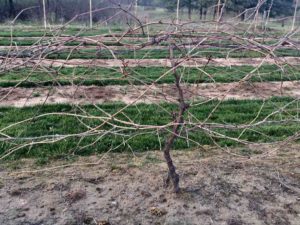
We finished pruning our grapes this week. Every spring it is a dramatic affair because of how much plant material we remove. Next year’s production comes from this year’s growth. Way more material is produced in one year than the grape-vine is able to handle. If left unpruned, a typical grape-vine will produce small grapes, and be highly susceptible to disease and insects. Not only will multiple vines arise all along the main trunk, but new growth will originate at the terminus of last year’s production laterals. Left unpruned several years these laterals will travel down the trellis fifty feet or more. The vines pictured here are three-year-old plants, and are a Concord-type variety called Fredonia. It makes wonderful juice for cider or jelly.
Pruning grape-vines is kind of like working a jig saw puzzle, or filling out a Sudoku puzzle. You want to pick the four best lateral arms to tie along the trellis, but all of the lateral are far longer than necessary, so long that they extend over into the spaces of the neighboring plants. You have to carefully determine which laterals are connected to the particular vine you are currently working on and which are connected to the adjacent (or beyond) plant. Careful multiple cuts are necessary to insure the best four “arms” are selected for each vine.
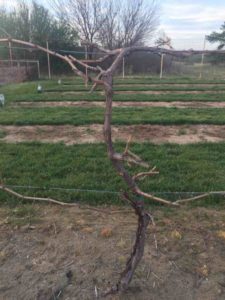
Okay, here is what the finished product looks like. You would be surprised, but by the end of the season you are back where you started with a tangled mess. We even prune multiple times throughout the summer to promote adequate air flow around and through the vines.
We usually wait to prune until leaf buds begin to emerge, so gently untangling the intertwining laterals is a must. Another issue is having to sometimes make a lateral branch snaking off to the right (or left) and force it to the left (or right) because no logical option exists. When it comes to pruning grapes, slow and steady wins the race.
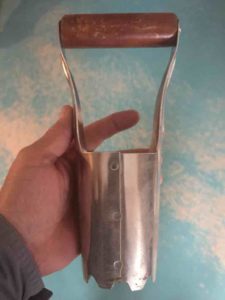 Over the years we have found that a standard bulb planter is the best tool for setting out our tomato and pepper starts in the spring. It works well for broccoli and cabbage plants too; in fact, everything we grow in our standard 2½” deep pots are set out with a common bulb planter. Our gardening methods involves not tilling the ground in the spring. In the fall, winter wheat is sown in the garden as a cover crop. The “cover” keeps winter weeds from getting a foothold and pumps organic matter into the soil, among other things. Dead wheat stubble is all that litters the ground in the spring at planting time.
With a push and a twist a perfect hole is made for the tomato or pepper plant. We drop the start undisturbed into the hole and press a little of the soil from the hole back around it to fill in the cracks, and water the new plant well to further settle it into its new home.
We hope this helps you in your garden this spring. If you don’t already have a bulb planter, below is a link on Amazon to a very affordable one. Clicking through from this site helps pay the bills for our website. Thanks in advance.
[amazon_link asins=’B000BWY4FO’ template=’ProductAd’ store=’us-1′ marketplace=’US’ link_id=’14b9be00-4599-11e8-9355-cd821d8d5275′]
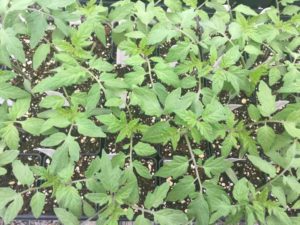 Plant sales have begun. We have a nice selection of tomatoes, peppers, eggplant, and herbs. We also have some Wave Petunias in purple, red, and pink. Everything is in 2½” deep pots. Call ahead, and come out and visit us.
Tomato Plants (large to small:
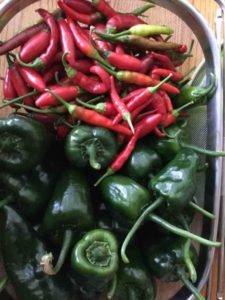 Pepper Plants (roughly from mild to HOT, large to small)
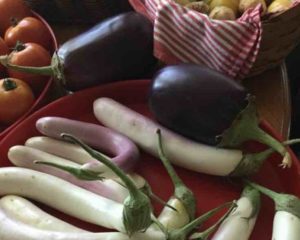 Eggplant Plants
Herb Plants
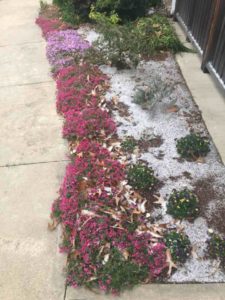
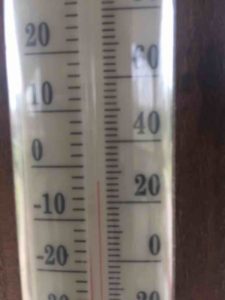 We woke up this last Saturday morning to temperatures in the high twenties and a dusting of snow, but it looks like everything–with the exception of a few asparagus spears above ground–came out without any damage. Well, I should include the Paw Paw tree blossoms, which took a pretty good hit, but more blooms are on the way as it blooms over an extended period.
All of that being said, it still looks like we are going to have a late spring garden this year. That is just fine as we have been picking lettuce out of the garden, and a few onions planted out in a hurry seem to be doing okay. Our big garden push isn’t until after the middle of April anyway, so we are good.
On a different note, we would like to inform you all that our bedding plants in the greenhouse will be ready to sell by early next week. Some of our pepper plants are still a bit small, especially the super hot varieties. More on that later. Our tomato plants will be ready at any rate. They are out of the greenhouse right now for a hardening-off session. They are looking great. We have a nice selection this year, but supplies are limited. Call and set up a time to come out late this week or early next. Note: we will be closed this Sunday, but every other day will be fine, just call ahead please.
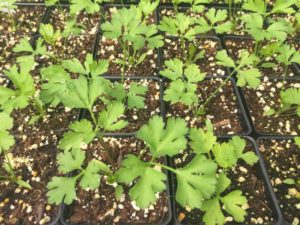 Don’t forget we have herb plants to sell as well: parsley, chives, sage, bronze fennel, and basil. We also have some beautiful petunia plants, but they will not be ready for a couple of weeks yet. Oh, and let us not forget to mention eggplant: Bride, Ping-Tung, Black Beauty, and Purple Shine.
Our pepper selection has been broadened this year to include several of the super hot varieties: Habenero (red, orange, and Chechen Itza) and Carolina Reeper. Stay tuned as these plants are still too small to set out just yet, not to mention it is too early in the season to do so. The sweet peppers are coming along nicely and should be ready to set out by early next week. As always, it is best to check your extended forecast before committing any plants to permanent planting outside.
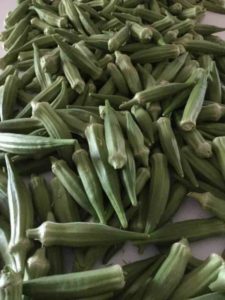 One last thing. When you come out, don’t forget to ask about okra seed. We had a wonderful season last year and so we collected seed from the best of the best of our Clemson Spineless crop. We would love to share them with you. Just ask. They are just a penny per seed. Or you can buy plants later in the spring at $1.50 per plant; or you can just wait till we start harvesting later this spring @ $3.00 per pound.
We look forward to seeing you soon. Don’t forget to call ahead.
Yesterday we got out and hand watered the orchard. We added six young trees this fall; four apples and two pears, so they especially got a thorough watering. Just because your trees and shrubs aren’t green and growing during the winter doesn’t mean that they do not need regular moisture. In many ways they need it just a much now as in the heat of summer. Especially this year, supplemental winter watering is a must. Here are some reasons why:
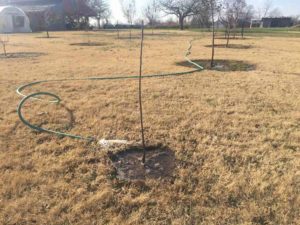 Newly fall-planted trees and shrubs are still establishing their root systems. Fall is the optimum time of year to plant, especially fruit trees.
Let us take this opportunity to wish all of you a very Merry Christmas. May His blessings be upon you this coming Holiday season and in the growing season of 2018. We look forward to seeing you in the spring.
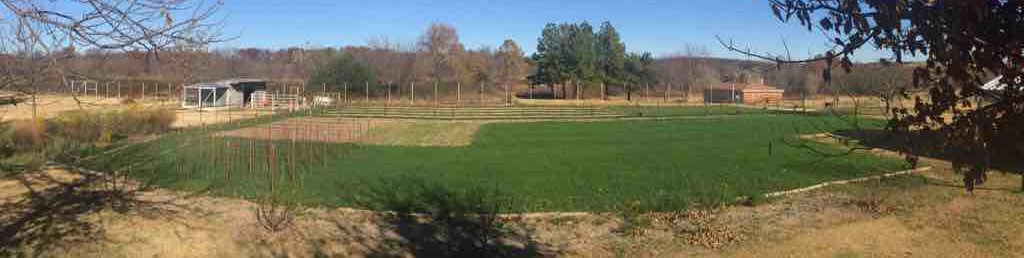
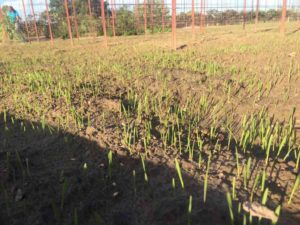
Every fall we sow hard red winter wheat in our garden. We call it “putting the garden to bed.” Most just call it planting a winter cover crop.
We usually begin sowing in late September. It can be done as late as late November. Here is how it is done :
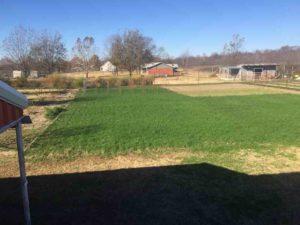
So what are the benefits of a winter cover crop in your garden, you might ask.
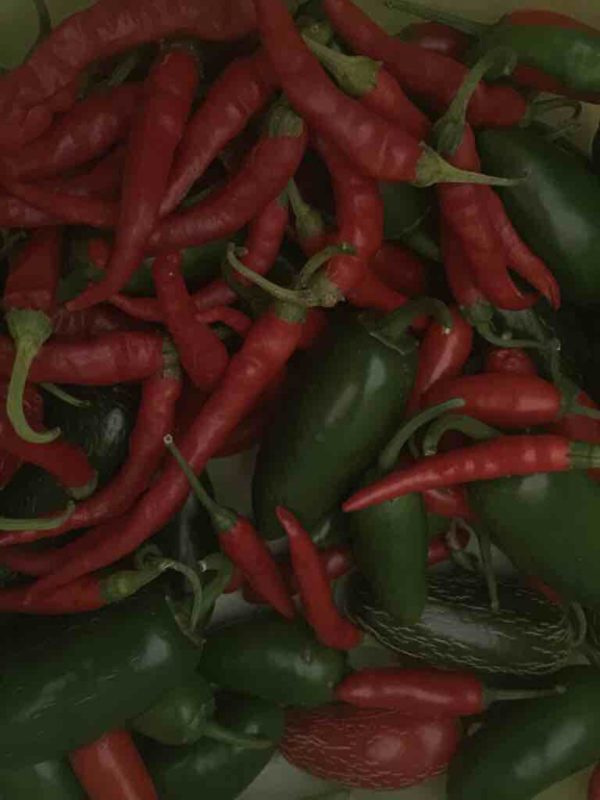
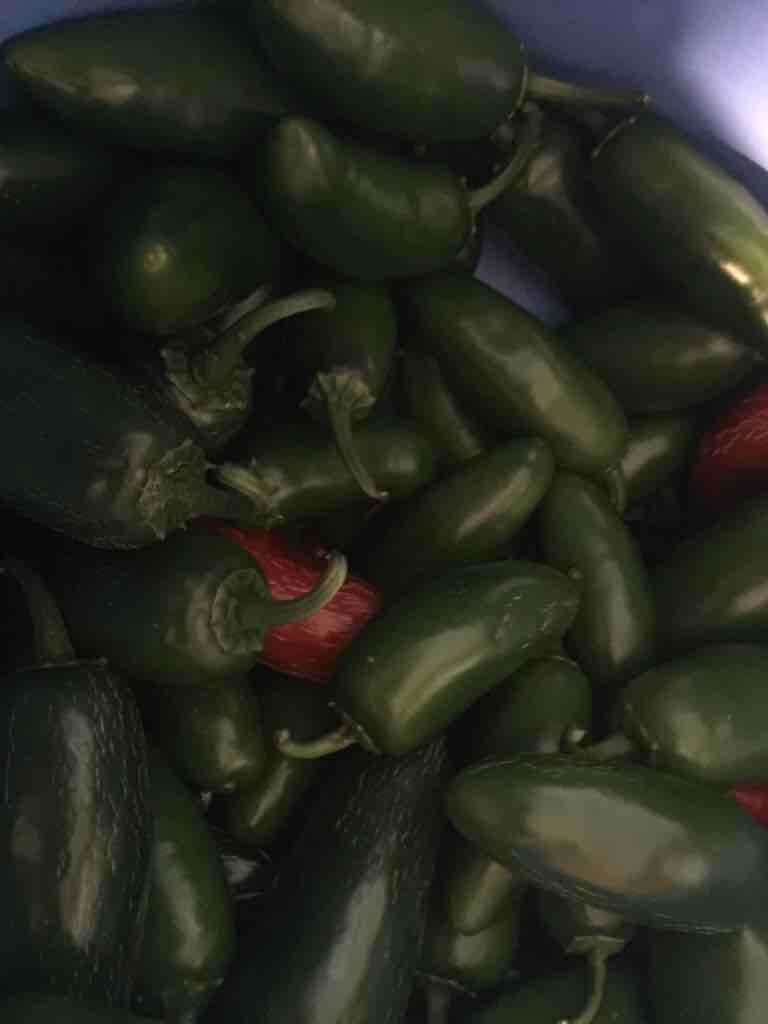
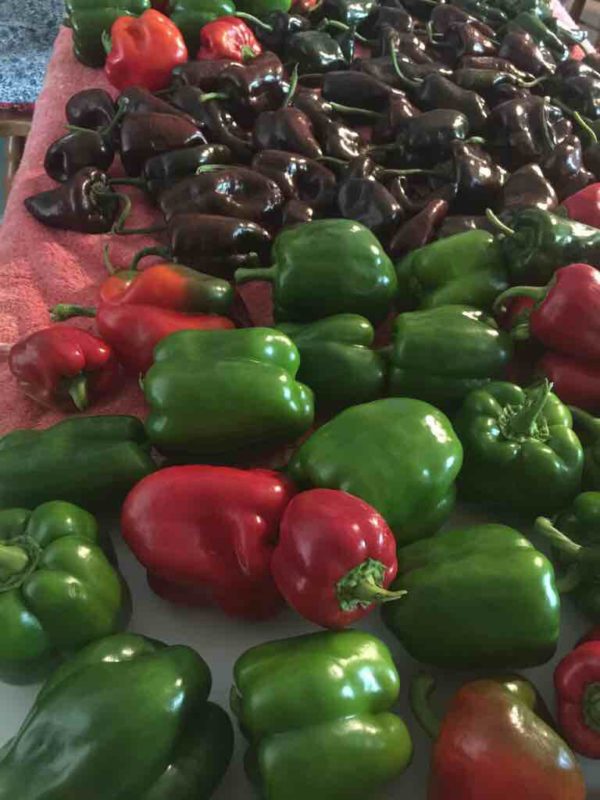
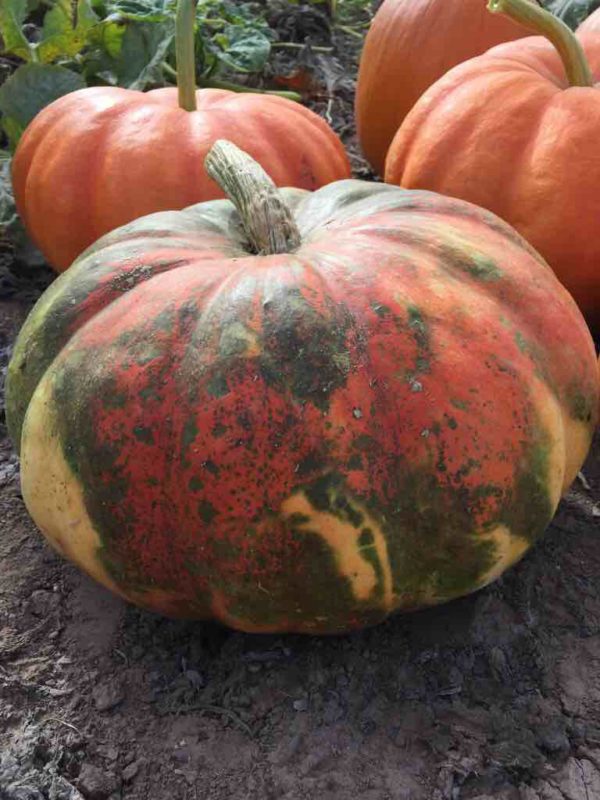
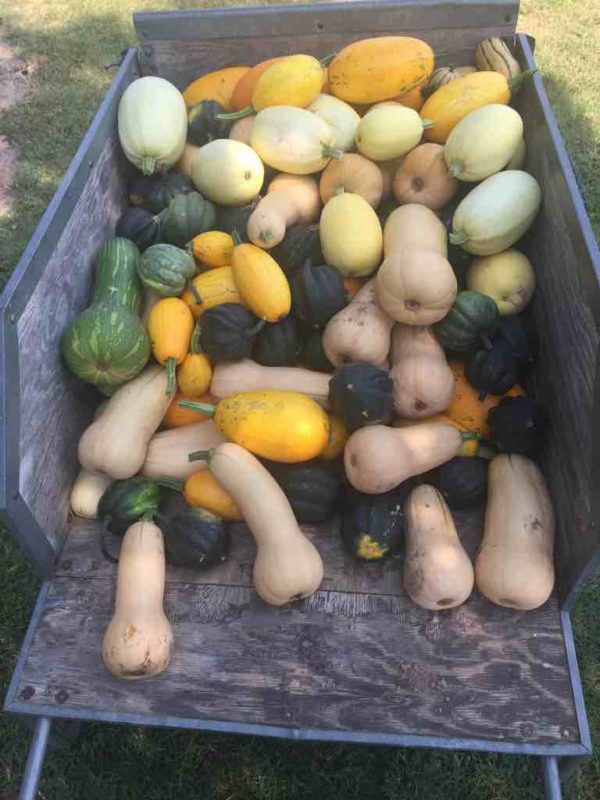
 Pumpkins and winter squash are now available on the farm. We also have sweet potatoes and chestnuts. Complete your holiday shopping with a trip to High-Fence Farm. Please call ahead as we do not have set hours. One of our favorite winter squash varieties is spaghetti squash. It comes in the familiar cream-colored variety, but also we have an orange spaghetti squash that is just as good.
If you are calling about apples we thank you for your interest, but we do not currently have apples to sell. Our orchard has been recently replanted with new trees. A tornado in the spring of 2015 knocked all of our bearing size trees to the ground so our apple orchard is in a rebuilding phase. We have nothing to pick but you are welcome to walk through the young orchard and dream with us.